You Really Don’t Want a Wild Jesus. Trust Me. « The Clockwork Pastor:
'via Blog this'

Showing posts with label mission. Show all posts
Showing posts with label mission. Show all posts
Monday, December 10, 2012


Thursday, April 26, 2012
Making a Case for Being Open and Affirming
The church where I'm the Associate Pastor (First Christian Church in Minneapolis) is considering becoming an official Open and Affirming Congregation in the Christian Church (Disciples of Christ). The congregation has a long history of welcoming gay and lesbian folk into the life of the congregation, so in many ways they have been a living example of being Open and Affirming. I wrote this for the church newsletter sharing why the church should take this next step. My one frustration is that I really didn't do as good a job on making a theological case. The text is below.
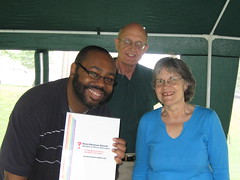 So, What’s the Big Deal?
At the April board meeting, a proposal was put forward to have First Christian become officially an Open and Affirming congregation. For those who are unaware, Open and Affirming is a network of churches within the Christian Church (Disciples of Christ) that openly welcome gays and lesbians.
This isn’t the first time First Christian has considered this. Whenever the issue has been brought up, there is a common refrain that I hear: “we already welcome gays and lesbians. Why do we need make this step?”
I understand this because I’ve seen how you have lived out your welcome to everyone that enters the door of the church. You have welcomed gay and lesbians to not only worship and participate in the life of the congregation, but you have also supported having LBGT persons in positions of leadership. Speaking as an openly gay man, I am ever thankful for your acceptance of me and allowing me to be one of your ministers. So, I don’t doubt for a moment that you while you might not wear the name “Open and Affirming” on your sleeves, you live it out in your daily walk. You truly believe that God welcomes everyone to the Table and you put that faith into action.
So, why should First Christian take this step?
I have two reasons: one is more practical and the other more theological.
People wonder why we need to publicly welcome gay people in a way that we don’t do when it comes to other groups such as African Americans or Hispanics. The difference though is that being gay is somewhat different that being African American. You all know that I’m African American by looking at me. But you can’t tell by looking at me that I’m also gay. Being gay can be somewhat of a “hidden” difference. You can’t really tell someone is gay until they say they are gay. Because it is hidden, this leads to a lot of assumptions. If a young woman comes to church, people might assume she either has a boyfriend or husband instead of thinking she might have a girlfriend. Also because there has been a history of churches not being so friendly to homosexuals which causes gays and lesbians to assume that a church is not friendly towards them- unless there is a visible sign that says they are welcomed.
The second reason is theological. The ministry of Jesus and later the ministry of the church was one that tended to cross various boundaries. Jesus engaged people who were outside of the Jewish community he was born into. He talked to Samaritans and Romans and always brought salvation to those who crossed his path. The early church also was led by the Holy Spirit to minister to the wider Roman world, which was a melting pot of various ethinicities. The church of the 21st century is also a diverse place, and the Spirit calls us again to go out and minister to various cultures, preaching the message of salvation in Christ. Welcoming gay and lesbians publicly is a way of stating that the gospel is for them as much as it is for anyone else. The apostles of the early church were witnesses to the saving acts of Christ, and two millenia later, we are still called to be witness to the Jesus we encounter.
In the words of the design of the Christian Church, First Christian really has “In Christ's name and by his grace we accept our mission of witness and service to all people.” We have lived our inclusive witness of the Gospel of Jesus Christ. I think it might be something we want to tell the whole world about.
At the April board meeting, a proposal was put forward to have First Christian become officially an Open and Affirming congregation. For those who are unaware, Open and Affirming is a network of churches within the Christian Church (Disciples of Christ) that openly welcome gays and lesbians.
This isn’t the first time First Christian has considered this. Whenever the issue has been brought up, there is a common refrain that I hear: “we already welcome gays and lesbians. Why do we need make this step?”
I understand this because I’ve seen how you have lived out your welcome to everyone that enters the door of the church. You have welcomed gay and lesbians to not only worship and participate in the life of the congregation, but you have also supported having LBGT persons in positions of leadership. Speaking as an openly gay man, I am ever thankful for your acceptance of me and allowing me to be one of your ministers. So, I don’t doubt for a moment that you while you might not wear the name “Open and Affirming” on your sleeves, you live it out in your daily walk. You truly believe that God welcomes everyone to the Table and you put that faith into action.
So, why should First Christian take this step?
I have two reasons: one is more practical and the other more theological.
People wonder why we need to publicly welcome gay people in a way that we don’t do when it comes to other groups such as African Americans or Hispanics. The difference though is that being gay is somewhat different that being African American. You all know that I’m African American by looking at me. But you can’t tell by looking at me that I’m also gay. Being gay can be somewhat of a “hidden” difference. You can’t really tell someone is gay until they say they are gay. Because it is hidden, this leads to a lot of assumptions. If a young woman comes to church, people might assume she either has a boyfriend or husband instead of thinking she might have a girlfriend. Also because there has been a history of churches not being so friendly to homosexuals which causes gays and lesbians to assume that a church is not friendly towards them- unless there is a visible sign that says they are welcomed.
The second reason is theological. The ministry of Jesus and later the ministry of the church was one that tended to cross various boundaries. Jesus engaged people who were outside of the Jewish community he was born into. He talked to Samaritans and Romans and always brought salvation to those who crossed his path. The early church also was led by the Holy Spirit to minister to the wider Roman world, which was a melting pot of various ethinicities. The church of the 21st century is also a diverse place, and the Spirit calls us again to go out and minister to various cultures, preaching the message of salvation in Christ. Welcoming gay and lesbians publicly is a way of stating that the gospel is for them as much as it is for anyone else. The apostles of the early church were witnesses to the saving acts of Christ, and two millenia later, we are still called to be witness to the Jesus we encounter.
In the words of the design of the Christian Church, First Christian really has “In Christ's name and by his grace we accept our mission of witness and service to all people.” We have lived our inclusive witness of the Gospel of Jesus Christ. I think it might be something we want to tell the whole world about.
Tuesday, December 13, 2011
More About Young Clergy
Fifty-something Presbyterian pastor, Jan Edmiston chimes in on the young vs. old clergy smackdown:
Read more...Several pastors seeking paid positions in the church are over age 65. Maybe they still have mortgages, or maybe they’ve used their savings to help their children, or maybe they’ve depleted their savings to pay medical bills. Several of those who come through my door have sick spouses who haven’t been earning a paycheck themselves for many years and things have been tight for a long time.
Tuesday, September 20, 2011
Retread: This Is Our Hope
The following was originally posted on February 14, 2011.
First Christian had its annual Anniversary Dinner yesterday, celebrating 134 years of ministry. I decided to make a video outlining what missions and ministries took place in the last year at church. Below is the result.
Wednesday, September 07, 2011
Lillian Daniel, Adam Copeland and the SBNRs
My last post created a lot of comments on Facebook. A colleague of mine disagreed with the article and me for the attitude against those who consider themselves "spiritual but not religious." Actually, I was agreeing to a short article written by UCC pastor Lillian Daniel and her comments have received a bit of criticism themselves. Here's what Presbyterian pastor Adam Copeland had to say:
Copeland does have some points to make, but I can't help but agree more with Daniel's original snarky response, than with Copeland's defense of the SBNRs. Maybe part of it comes from being in ministry a bit longer than Copeland. Just a few weeks from my 42nd birthday, I'm not the angry young man I used to be. Things that I thought were just the bees knees are now seen as sheer foolishness. I'm not whining as much about how unfair the world is and more willing to say that we need to develop a spiritual toughness against the harshness of life. The people inside the church are not as stupid and backward as we thought they were. The folks outside the church are not the fonts of wisdom we once thought they were.
- Really? An airplane? Would that be first-class or coach? I meet with people (young adults, mostly) every week who call themselves “spiritual but not religious.” They tend to be underemployed, live month-to-month, and are doing their best to find meaning in their tumultuous lives. Sure, the phrase “spiritual but not religious” needs some unpacking for pastors whose livelihoods depend on people’s public religiosity, but I’ve never heard it as “rebellion against the religious status quo.” Rather, the phrase is more a humble testimony that they just don’t seem to connect with fancy churches. And who can blame them?
- As opposed to what Daniel suggests, the “spiritual but not religious” folks I talk to yearn for community. I have not found one who wants simply to have “deep thoughts all by oneself” as Daniel accuses. What might be true, however, is that the community they seek isn’t offered at most mainline churches with our endowment funds and dress codes and judgmental matriarchs and patriarchs. You see, some “spiritual but not religious” folks sense a certain righteous attitude from these institutions (go figure?). Many were once burned by hugely negative experiences with the church and it’ll take the church reaching out — in love, not in snark — for healing to begin.
- God is working in the lives of the “spiritual but not religious.” I happen to believe they have a huge amount to teach the church about connecting to God, supporting true community, sustaining spiritual practices, and living out St. Augustine’s call for a “faith seeking understanding.” Daniel asks, “Can I spend my time talking to someone brave enough to encounter God in a real human community?” I say, Yes, feel free to do that in your church. But also be brave enough to listen to those encountering God in ways you don’t fully understand. Learn from them.
Copeland does have some points to make, but I can't help but agree more with Daniel's original snarky response, than with Copeland's defense of the SBNRs. Maybe part of it comes from being in ministry a bit longer than Copeland. Just a few weeks from my 42nd birthday, I'm not the angry young man I used to be. Things that I thought were just the bees knees are now seen as sheer foolishness. I'm not whining as much about how unfair the world is and more willing to say that we need to develop a spiritual toughness against the harshness of life. The people inside the church are not as stupid and backward as we thought they were. The folks outside the church are not the fonts of wisdom we once thought they were.
Monday, February 14, 2011
The Social Network
Via Scott McKnight, I came upon this blog post by Richard Beck about how Facebook is killing the church. Yes, you heard me: Facebook is killing the church.
I think this post exposes one of the weaknesses of the modern-day church, and reminds us what church is all about. Churches are of course made up of humans, so they are social communities, places where people connect with one another. Friendships are made at church. People find their future husband or wife at church.
The problem isn't that churches are social communities; the problem is when that's all they are. In the heyday of mainline churches, congregations could get away with being a religious Elks Club. But what happens when new communal spaces like Facebook come around? Well, people don't need to go to a church to meet other people when they can do that on Facebook or Twitter or someplace else.
Churches have to be places where we can connect with each other, but also remind us of the holy. They have to be places where we are formed into the likeness of Christ. Yes, they need to be places of social connection, but that can't be the main thing anymore. It never was supposed to be.
The difference between Generations X and Y isn't in their views of the church. It's about those cellphones. It's about relationships and connectivity. Most Gen X'ers didn't have cell phones, text messaging or Facebook. These things were creeping in during their college years but the explosive onset of mobile devices and social computing had yet to truly take off.
So why has mobile social computing affected church attendance? Well, if church has always been kind of lame and irritating why did people go in the first place? Easy, social relationships. Church has always been about social affiliation. You met your friends, discussed your week, talked football, shared information about good schools, talked local politics, got the scoop, and made social plans ("Let's get together for dinner this week!"). Even if you hated church you could feel lonely without it. Particularly with the loss of "third places" in America.
But Millennials are in a different social situation. They don't need physical locations for social affiliation. They can make dinner plans via text, cell phone call or Facebook. In short, the thing that kept young people going to church, despite their irritations, has been effectively replaced. You don't need to go to church to stay connected or in touch. You have an iPhone.
Sure, Millennials will report that the "reason" they are leaving the church is due to its perceived hypocrisy or shallowness. My argument is that while this might be the proximate cause the more distal cause is social computing. Already connected Millennials have the luxury to kick the church to the curb. This is the position of strength that other generations did not have. We fussed about the church but, at the end of the day, you went to stay connected. For us, church was Facebook!
I think this post exposes one of the weaknesses of the modern-day church, and reminds us what church is all about. Churches are of course made up of humans, so they are social communities, places where people connect with one another. Friendships are made at church. People find their future husband or wife at church.
The problem isn't that churches are social communities; the problem is when that's all they are. In the heyday of mainline churches, congregations could get away with being a religious Elks Club. But what happens when new communal spaces like Facebook come around? Well, people don't need to go to a church to meet other people when they can do that on Facebook or Twitter or someplace else.
Churches have to be places where we can connect with each other, but also remind us of the holy. They have to be places where we are formed into the likeness of Christ. Yes, they need to be places of social connection, but that can't be the main thing anymore. It never was supposed to be.
This Is Our Hope
First Christian had its annual Anniversary Dinner yesterday, celebrating 134 years of ministry. I decided to make a video outlining what missions and ministries took place in the last year at church. Below is the result.
Saturday, October 16, 2010
The Spiritual Discipline of Giving
A few weeks ago, I stopped by the children's Sunday School class before Sunday worship. After a few minutes, Mason and his brother Fletcher showed up. Little Mason was clutching a dollar bill. Being a little kid, he was running around the room doing various things, but he never let go of that dollar.
In chatting with Mason's teacher, Spiritual Formation Director Deb Murphy, I knew where that dollar was going to go. In the classroom sits a shoebox wrapped in blue construction paper. It's the blessing box, and all of the children who attend place money in that box. After a certain amount of time, Deb gathers the children and they talk about what to do with the money. In the past they have given money to the Heifer Project to buy animals for people around the world.
Later this year, these kids will work to donate sunglasses to kids at Plaster House, a children's rehabilitation hospital in Tanzania.
As I reviewed all of this, I realized that Deb was teaching these kids a spiritual discipline, the discipline of giving.
Being a Christian is not simply about what we believe, but it is also about how we live in light of what we believe. In a recent article in the evangelical magazine Christianity Today, writer Keri Wyatt Kent notes that Jesus gave everything on the cross. To say we love, but then do nothing to show that loves, really puts our love in question. Kent quotes another evangelical, writer and social justice activist Shane Claireborne who had this to say about our beliefs and out actions:
Giving is a way of showing people how much we love God. Those kids in Sunday School are learning that being a follower of Jesus is not just about believing certain thing, but it is also about how we live our lives, how we help our fellow sisters and brothers. Giving also reminds us of the love that God showed us in the life, death and resurrection of Jesus. When we give, we are reminded of God's love for us.
I think about what First Chirstian has done over the last few months. We made 10 welcome baskets for the Currie Avenue Partnership. We made 19 backpacks for Central Lutheran's Restoration Center. We have gone on a regular basis to Feed My Starving Children to help hungry children around the world. I've see the Handcrafters make prayer shawls. What I hope you all realize is that this is a way to express our love for God. This isn't simply about doing good deeds or being a good person, but about realizing what God has done in our lives and expressing our thanks in our holy work helping our sisters and brothers.
I usually end this column with the words, "Go and be church." Being church means living our lives as followers of Jesus. Little Mason is learning what it means to follow Jesus and I hope all of us more "mature kids" are learning as well.
Go and be church.
Dennis Sanders
Associate Pastor for Mission and Diversity
First Christian Church, Minneapolis
In chatting with Mason's teacher, Spiritual Formation Director Deb Murphy, I knew where that dollar was going to go. In the classroom sits a shoebox wrapped in blue construction paper. It's the blessing box, and all of the children who attend place money in that box. After a certain amount of time, Deb gathers the children and they talk about what to do with the money. In the past they have given money to the Heifer Project to buy animals for people around the world.
Later this year, these kids will work to donate sunglasses to kids at Plaster House, a children's rehabilitation hospital in Tanzania.
As I reviewed all of this, I realized that Deb was teaching these kids a spiritual discipline, the discipline of giving.
Being a Christian is not simply about what we believe, but it is also about how we live in light of what we believe. In a recent article in the evangelical magazine Christianity Today, writer Keri Wyatt Kent notes that Jesus gave everything on the cross. To say we love, but then do nothing to show that loves, really puts our love in question. Kent quotes another evangelical, writer and social justice activist Shane Claireborne who had this to say about our beliefs and out actions:
"If you ask most people what Christians believe, they can tell you, 'Christians believe that Jesus is God's Son and that Jesus rose from the dead.' But if you ask the average person how Christians live, they are struck silent. We have not shown the world another way of doing life. Christians pretty much live like everybody else, they just sprinkle in a little Jesus along the way."
Giving is a way of showing people how much we love God. Those kids in Sunday School are learning that being a follower of Jesus is not just about believing certain thing, but it is also about how we live our lives, how we help our fellow sisters and brothers. Giving also reminds us of the love that God showed us in the life, death and resurrection of Jesus. When we give, we are reminded of God's love for us.
I think about what First Chirstian has done over the last few months. We made 10 welcome baskets for the Currie Avenue Partnership. We made 19 backpacks for Central Lutheran's Restoration Center. We have gone on a regular basis to Feed My Starving Children to help hungry children around the world. I've see the Handcrafters make prayer shawls. What I hope you all realize is that this is a way to express our love for God. This isn't simply about doing good deeds or being a good person, but about realizing what God has done in our lives and expressing our thanks in our holy work helping our sisters and brothers.
I usually end this column with the words, "Go and be church." Being church means living our lives as followers of Jesus. Little Mason is learning what it means to follow Jesus and I hope all of us more "mature kids" are learning as well.
Go and be church.
Dennis Sanders
Associate Pastor for Mission and Diversity
First Christian Church, Minneapolis
Tuesday, October 05, 2010
Retreads: I Think I Can, I Think I Can...
From my prior blog, originally written in October of 2009.
I've recently noticed something about myself in relation to my having Aspergers. I tend to be someone that can be doggedly persistent about something. Where as others can be focused on something for a while and then give up, I tend to persist...and persist.
For example, whenever I've been without work, I've been dillegent in looking for work. I'm basically running like clockwork.
At church, I've noticed that others don't tend to have much hope the church will continue. Even though there are those that I think want change, because others tend to not be that interested in changing there is a sense that there is no hope and that we should just learn to die well.
Now, they could just be realistic. However, in my view, I tend to think that if there are some people that want change, then you just keep at it and ignore those who don't want to change.
In the whole conversation, I've been the one that seems to be the one that wants to damn all the naysayers and keep trying. I want to believe that God is not done with First Christian and that if we are just open to what God is saying, a miracle will happen. Even the Senior Pastor based on the evidence is not hopeful the church will survive.
Maybe they are all correct and I'm all wet.
When I was leading Community of Grace, I held on to that project with all my stregnth. I did finally give up and closed the ministry, but I still look back and think I didn't try hard enough.
I'm hardly an Pollyana. But I think because my Aspie brain is so focused, I can't really see other options. Of course that can be a bad thing. Sometimes you have to see other options and understand that what we want and hope for might not come true.
But I also think it has a good side. As I journey within mainline Protestantism, I tend to see a lot of what I would call defeatism. We look backward at the past and long for the "good 'ol days" when the pews were full. We look at our small flock and think there is no hope.
But what if the church saw things like someone with Aspergers? What if we were single-focused on doing God's will in our particular setting? What if we believed all those stories told to us about how God took all those "uncool" people like Gideon and performed a mighty deed?
My brain is wired in a way that I'm a doer. I might not be the best person socially, but I can do the work required. I really do believe with faith in God and hard work, there are still good days ahead for First Christian.
Maybe I'm an idiot, but I don't think God is done with First Christian in Minneapolis. I have to believe that God is just waiting for us to know that we still have much to give to the service of God's kingdom.
I think we can, I think we can...
I've recently noticed something about myself in relation to my having Aspergers. I tend to be someone that can be doggedly persistent about something. Where as others can be focused on something for a while and then give up, I tend to persist...and persist.
For example, whenever I've been without work, I've been dillegent in looking for work. I'm basically running like clockwork.
At church, I've noticed that others don't tend to have much hope the church will continue. Even though there are those that I think want change, because others tend to not be that interested in changing there is a sense that there is no hope and that we should just learn to die well.
Now, they could just be realistic. However, in my view, I tend to think that if there are some people that want change, then you just keep at it and ignore those who don't want to change.
In the whole conversation, I've been the one that seems to be the one that wants to damn all the naysayers and keep trying. I want to believe that God is not done with First Christian and that if we are just open to what God is saying, a miracle will happen. Even the Senior Pastor based on the evidence is not hopeful the church will survive.
Maybe they are all correct and I'm all wet.
When I was leading Community of Grace, I held on to that project with all my stregnth. I did finally give up and closed the ministry, but I still look back and think I didn't try hard enough.
I'm hardly an Pollyana. But I think because my Aspie brain is so focused, I can't really see other options. Of course that can be a bad thing. Sometimes you have to see other options and understand that what we want and hope for might not come true.
But I also think it has a good side. As I journey within mainline Protestantism, I tend to see a lot of what I would call defeatism. We look backward at the past and long for the "good 'ol days" when the pews were full. We look at our small flock and think there is no hope.
But what if the church saw things like someone with Aspergers? What if we were single-focused on doing God's will in our particular setting? What if we believed all those stories told to us about how God took all those "uncool" people like Gideon and performed a mighty deed?
My brain is wired in a way that I'm a doer. I might not be the best person socially, but I can do the work required. I really do believe with faith in God and hard work, there are still good days ahead for First Christian.
Maybe I'm an idiot, but I don't think God is done with First Christian in Minneapolis. I have to believe that God is just waiting for us to know that we still have much to give to the service of God's kingdom.
I think we can, I think we can...
Wednesday, September 29, 2010
For Gay Youth...
 Since there has been a lot of talk about a lot of gay teens committing suicide, I wanted to share something that the church I am at is doing starting October 8.
We are starting a program geared towards gay teens where they can come together in a safe space and maybe learn that God loves them just as they are.
You can find out more by reading this post at the church website.
Friday, September 24, 2010
It Gets Better
It's never easy being a teen, and it's harder if you are gay or dealing with autism. In junior high and in high school, I was dealing with both. At the time, I didn't know I had Aspergers and was working hard to deny being gay.
I remember being picked on and told I was gay and the teasing was bad in my junior high years. I can remeber especially when I was maybe 14 or 15 being picked on in church. There was one particular guy that would always call me gay or insinuate in various ways that I was different.
Long story short, I didn't fit in and while there was a lot of good things that happened to me back then, I also felt very lonely and very afraid at times.
Back in the summer, our Christian Educator, Deb told us about what was happening in the Anoka-Hennepin district, a suburban school district north of Minneapolis. A number of teens have committed suicide after being bullied and most if not all of those kids were gay. After hearing some of the issues from a friend and teacher in the district, Deb was spurred to action and our church helped put together a fundraiser for the teacher, Jefferson who is walking in the American Foundations for Suicide Prevention's annual walk this Saturday. Deb even went farther to create a program for gay youth where they can come and talk and have safe space at a choatic time in their lives.
Columnist Dan Savage was spurred to action because of teen suicides in his area and put together a project called, "It Gets Better." In the video below, he and his partner help young gay teens know that life does get better after high school. I was touched by Dan's story of seeing Paris at dawn with his five-year-old sun. My partner Daniel and I went to Paris in 2008 for our honeymoon. I had been to Paris 10 year earlier, by myself, but I will forever remember this trip because I was with my love. I remember eating pastries with Daniel from bakery right near Notre Dame. What a wonderful memories.
The fact is, it does get better. Hey, I got to be a pastor! And I got to travel to Buenos Aires! My parents have come to accept me as being gay and they love Daniel as the white-Norwegian son-in-law they never had.
I should add that kids with autism should also know that it will get better. You will find people who accept you for who you are and will love you. People will come to love and accept you, even with your quirks.
I guess the thing I want to say is that things can get better. If you are a young gay teen or a kid with autism that is having a hard time at school and church...know that it does get better. The bullies will only last a time. And know that there are caring communities out there. Seek them out. You will find out that life really is worth it if you just stick around.
I remember being picked on and told I was gay and the teasing was bad in my junior high years. I can remeber especially when I was maybe 14 or 15 being picked on in church. There was one particular guy that would always call me gay or insinuate in various ways that I was different.
Long story short, I didn't fit in and while there was a lot of good things that happened to me back then, I also felt very lonely and very afraid at times.
Back in the summer, our Christian Educator, Deb told us about what was happening in the Anoka-Hennepin district, a suburban school district north of Minneapolis. A number of teens have committed suicide after being bullied and most if not all of those kids were gay. After hearing some of the issues from a friend and teacher in the district, Deb was spurred to action and our church helped put together a fundraiser for the teacher, Jefferson who is walking in the American Foundations for Suicide Prevention's annual walk this Saturday. Deb even went farther to create a program for gay youth where they can come and talk and have safe space at a choatic time in their lives.
Columnist Dan Savage was spurred to action because of teen suicides in his area and put together a project called, "It Gets Better." In the video below, he and his partner help young gay teens know that life does get better after high school. I was touched by Dan's story of seeing Paris at dawn with his five-year-old sun. My partner Daniel and I went to Paris in 2008 for our honeymoon. I had been to Paris 10 year earlier, by myself, but I will forever remember this trip because I was with my love. I remember eating pastries with Daniel from bakery right near Notre Dame. What a wonderful memories.
The fact is, it does get better. Hey, I got to be a pastor! And I got to travel to Buenos Aires! My parents have come to accept me as being gay and they love Daniel as the white-Norwegian son-in-law they never had.
I should add that kids with autism should also know that it will get better. You will find people who accept you for who you are and will love you. People will come to love and accept you, even with your quirks.
I guess the thing I want to say is that things can get better. If you are a young gay teen or a kid with autism that is having a hard time at school and church...know that it does get better. The bullies will only last a time. And know that there are caring communities out there. Seek them out. You will find out that life really is worth it if you just stick around.
Tuesday, September 21, 2010
The Church, Autism and a place of Welcome
I wrote this post originally back in July of this year. I've added a few things and expanded upon it.
When I was a kid , I spent several years on the junior usher board at church. Of course, back in the 70s, neither I nor my parents knew I was autistic, but they knew things were a bit off with me.
Anyway, being an usher in the African American church is an artform. You wear certain uniforms and there were certain hand signals that you would use to indicate a certain need. When the time came for prayer, you were supposed to cross your arms over your chest and bow your head. I can remember the feeling of cocooning myself into this little ball and it felt good. Once I was in that position, I would start twisting or rocking my torso, to the left and then to right. Back and forth, back and forth. It felt good to me, but it must have looked damn weird to the people in the pews. I can distinctly remember one day being in my happy place and rocking back and forth until a pair of hands touched my shoulders indicating that it was time to stop.
Looking back 30 years later, that was a vivid example of kid with autism in the church. I don't know if what the person did was correct or not, but I do wonder if people were disturbed at what I was doing.
Now that I am a pastor and someone with autism, I have started to wonder how those with autism are treated in the church. In talking with a good friend who has two children on the spectrum, I have found out that churches have a long way to go in welcoming people and families where one or more persons are on the spectrum.
I stumbled upon this blog post by a special-ed teacher in Georgia, who shares the struggles he and his wife have faced when it comes to the church accomodating his son who is autistic:
Ouch.
The thing is, a lot of this rings true. There are many churches where the worship service is meant to be a time of silence and decorum. God help you if a kid gets cranky. But it's one thing if grown people are talking out of turn; it's another if a kid with autism is having a meltdown.
Churches have to be more aware and willing to find ways to welcome special needs persons. Of course, being a pastor I also know that isn't so easy to do, especially when it comes autism. Sometimes a person with autism could be very disruptive in a worship service and dealing with a person with autism can be difficult. There isn't a one-size-fits-all solution. That said, no one ever said being church was easy.
When it comes to this family, I wonder what would have happened had the pastor worked with family and other leaders to make church a more welcome place, not only for the kid, but for the parents. It is interesting that in all of this, it seems that the Senior Pastor was absent.
Raising a kid with autism can be challenging for parents. They love their kids and will do what it takes to make sure they are well-cared for. But it can also be draining for them as well and it seems like in this case, no one seemed to care about the spiritual and emotional health of Thomas' parents.
Maybe the problem here is that church is so formal. We treat it like we are watching the symphony. We want to hear the music and the choir, but we don't want to hear babies crying; that just ruins everything.
I'm not saying that church needs to be a rock concert, but what it we allowed a bit more informality?
Lesile Phillips, a blogger from Houston is more pointed in how churches treat persons with autism and other behavior disorders:
I don't know what I can do to make church more welcoming to my fellow aspies, but I will try. I want church to be a place where freaks are welcomed.
When I was a kid , I spent several years on the junior usher board at church. Of course, back in the 70s, neither I nor my parents knew I was autistic, but they knew things were a bit off with me.
Anyway, being an usher in the African American church is an artform. You wear certain uniforms and there were certain hand signals that you would use to indicate a certain need. When the time came for prayer, you were supposed to cross your arms over your chest and bow your head. I can remember the feeling of cocooning myself into this little ball and it felt good. Once I was in that position, I would start twisting or rocking my torso, to the left and then to right. Back and forth, back and forth. It felt good to me, but it must have looked damn weird to the people in the pews. I can distinctly remember one day being in my happy place and rocking back and forth until a pair of hands touched my shoulders indicating that it was time to stop.
Looking back 30 years later, that was a vivid example of kid with autism in the church. I don't know if what the person did was correct or not, but I do wonder if people were disturbed at what I was doing.
Now that I am a pastor and someone with autism, I have started to wonder how those with autism are treated in the church. In talking with a good friend who has two children on the spectrum, I have found out that churches have a long way to go in welcoming people and families where one or more persons are on the spectrum.
I stumbled upon this blog post by a special-ed teacher in Georgia, who shares the struggles he and his wife have faced when it comes to the church accomodating his son who is autistic:
One would think that the safest place in the world for children with disabilities would be in houses of worship, among people dedicated to God, love, mercy, grace, compassion, faith, and forgiveness. But this is not true at all. The worship service itself, with constant demands for compliance and conformity, is hostile for those who are inherently different from everyone else. Anyone who is unable to conform to the structures of the service is not welcome and asked to leave. The larger the church, the more true this will be.
I may editorialize more on my feelings toward church and those with disabilities later, but I want to talk a bit about how churches attempt to deal with this unique and growing population. In this particular church spoken about above, they attempted to recruit helpers in order to help Thomas participate in the same activities as his peers. I think the intent of the program was excellent, and it started out well enough. But without diligence by a committed coordinator, it becomes just another chore to dread like ushering, parking lot duty, being a greeter or assorted other mundane tasks and ministries in the church. Yes, we are the boy’s parents and he is our responsibility which we take seriously. But no one was caring much about our own spiritual growth or struggles. Staying home is a more Holy, peaceful and rejuvenating experience for many families that have children with disabilities. Church is often a hostile, hellish experience where families are segregated or ostracized. I don’t think Jesus would approve.
Ouch.
The thing is, a lot of this rings true. There are many churches where the worship service is meant to be a time of silence and decorum. God help you if a kid gets cranky. But it's one thing if grown people are talking out of turn; it's another if a kid with autism is having a meltdown.
Churches have to be more aware and willing to find ways to welcome special needs persons. Of course, being a pastor I also know that isn't so easy to do, especially when it comes autism. Sometimes a person with autism could be very disruptive in a worship service and dealing with a person with autism can be difficult. There isn't a one-size-fits-all solution. That said, no one ever said being church was easy.
When it comes to this family, I wonder what would have happened had the pastor worked with family and other leaders to make church a more welcome place, not only for the kid, but for the parents. It is interesting that in all of this, it seems that the Senior Pastor was absent.
Raising a kid with autism can be challenging for parents. They love their kids and will do what it takes to make sure they are well-cared for. But it can also be draining for them as well and it seems like in this case, no one seemed to care about the spiritual and emotional health of Thomas' parents.
Maybe the problem here is that church is so formal. We treat it like we are watching the symphony. We want to hear the music and the choir, but we don't want to hear babies crying; that just ruins everything.
I'm not saying that church needs to be a rock concert, but what it we allowed a bit more informality?
Lesile Phillips, a blogger from Houston is more pointed in how churches treat persons with autism and other behavior disorders:
What I find fascinating (and by that I mean infuriating) is that often the people who claim to be most understanding, most inclusive and most loving are often actually the most judgmental, UN-welcoming people out there. Sure, many faith communities have taken the trouble to build ramps or make accommodations for people with physical disabilities. Sorry to say folks, but that's the easy stuff. When are we going to get to the hard stuff?
The hard stuff is making successful inclusion happen for people whose disabilities have behavioral manifestations, like autism, bipolar disorder, Tourette Syndrome. Many people can understand that children with autism may have behavior challenges, but they seem to think that because a place of worship should be quiet and reverent that a child can somehow leave their disability "at the door". If walking into a place of worship cured my son's autism, I'd live in one. It doesn't work that way. His disability follows him right inside the door, past ornate statues, alongside people in fancy-colored robes, among people praying and singing - you name it, it's there.
I was raised as a Christian. Christians are fond of asking "What would Jesus do?" (In fact, they are so fond of asking it, they sometimes sport bracelets that simply say "WWJD?") Would he turn my son away? What about your faith, whatever it may be? Is it consistent with your beliefs that people with challenges and their families, who likely need supportive fellowship more than anyone on the planet, should be excluded from worship?
I don't know what I can do to make church more welcoming to my fellow aspies, but I will try. I want church to be a place where freaks are welcomed.
Monday, September 20, 2010
Retreads: The Aspie Pastor and Evangelism
The following is a post I wrote back in February about evangelism and autism on my old blog. I thought I'd re-post it here.
[caption id="attachment_34" align="alignleft" width="210" caption="One of my cats, Morris, circa 2002."] [/caption]
One of the things I have learned since my diagnosis is that I really have a hard time connecting with people. I don't mean to say that I'm friendless, but it's a lot harder for me to meet people than it is for others.
Our congregation is trying to encourage people to start sharing their faith in non-coercive ways. I think it's a great idea and I've seen how the Senior Pastor has been able to talk and share his life with others.
But I sit somewhat amazed at how he does it. I mean, I've tried to invite people to church events, but I feel at times like Data from Star Trek: I might understand the mechanics of something, but not it's essence.
My aspie way of evangelism is sending someone a Facebook event invite. Something tells me that while that's one way of inviting people to church, it is not the most effective way.
The fact of the matter is, I don't know how to invite someone to church because I am lost in inviting people, period. I think that's why the church start that I was a part of failed so badly: I had no idea how to build those relationships that one needs. Oh, I would ask people, but I don't think it had that same "magic" that it has when it comes from someone that isn't autistic.
It's funny- I feel God has called me to be at this place, to help this church grow spiritually and be able to share their faith lives with friends and neighbors and yet I have a big issue in how to actually share my life, something that I have a hard time doing. God really does work in mysterious ways.
I feel at times like a cat trying to make my way in a dog world. Dogs are social animals and love to be with other dogs ( I guess that's what the butt-sniffing is all about). But cats tend to be solitary and don't understand what's up with those crazy dogs.
I wish there was a cat way to be social, a feline way of evangelism.
Let's see what God has to say.
[caption id="attachment_34" align="alignleft" width="210" caption="One of my cats, Morris, circa 2002."]
 [/caption]
One of the things I have learned since my diagnosis is that I really have a hard time connecting with people. I don't mean to say that I'm friendless, but it's a lot harder for me to meet people than it is for others.
Our congregation is trying to encourage people to start sharing their faith in non-coercive ways. I think it's a great idea and I've seen how the Senior Pastor has been able to talk and share his life with others.
But I sit somewhat amazed at how he does it. I mean, I've tried to invite people to church events, but I feel at times like Data from Star Trek: I might understand the mechanics of something, but not it's essence.
My aspie way of evangelism is sending someone a Facebook event invite. Something tells me that while that's one way of inviting people to church, it is not the most effective way.
The fact of the matter is, I don't know how to invite someone to church because I am lost in inviting people, period. I think that's why the church start that I was a part of failed so badly: I had no idea how to build those relationships that one needs. Oh, I would ask people, but I don't think it had that same "magic" that it has when it comes from someone that isn't autistic.
It's funny- I feel God has called me to be at this place, to help this church grow spiritually and be able to share their faith lives with friends and neighbors and yet I have a big issue in how to actually share my life, something that I have a hard time doing. God really does work in mysterious ways.
I feel at times like a cat trying to make my way in a dog world. Dogs are social animals and love to be with other dogs ( I guess that's what the butt-sniffing is all about). But cats tend to be solitary and don't understand what's up with those crazy dogs.
I wish there was a cat way to be social, a feline way of evangelism.
Let's see what God has to say.
Sunday, September 19, 2010
"Write the Future"
How much impact can an struggling church in the urban core of Minneapolis have on the world?
Well, a lot if it knows that church is verb as much as it is a noun.
A recent post on the blog Church Marketing Sucks referenced a marketing campaign by Nike that was shown during the 2010 World Cup in South Africa. Called "Write the Future," the ad features several well-known soccer players making moves that could either win or lose the game and the ripples those actions make around the world.
The writer of the blog likens this to the church. A gathering of believers can have a major impact in our world today, but too often we call people to "come and stay" instead of "go and do."
First Christian Church is a group of people who come together to worship God and care for each other. First Christian is a noun. But First Christian is also a verb, it is a gathering of followers of Jesus Christ, who go into the world to care for the poor and the outcast.
Examples abound of those writing the future and "doing church." I am reminded of the Handcrafters as they make prayer shawls. I think of those who donated to the Backpack Sunday drive First Christian did with Central Lutheran, helping countless children get school supplies. I think of the Young Adults who took a Saturday evening to make sandwhiches for the Dignity Center, a ministry of Hennepin Avenue Methodist to help homeless folks have something in the bellies for the day.
A church like First Christian might not be many in number, but it can "write the future." We can live out faith as followers of Jesus Christ and make a difference in the lives of untold numbers of people, both here in Minneapolis and around the world.
Let's continue writing the future, First Christian. Go and do church.
Well, a lot if it knows that church is verb as much as it is a noun.
A recent post on the blog Church Marketing Sucks referenced a marketing campaign by Nike that was shown during the 2010 World Cup in South Africa. Called "Write the Future," the ad features several well-known soccer players making moves that could either win or lose the game and the ripples those actions make around the world.
The writer of the blog likens this to the church. A gathering of believers can have a major impact in our world today, but too often we call people to "come and stay" instead of "go and do."
First Christian Church is a group of people who come together to worship God and care for each other. First Christian is a noun. But First Christian is also a verb, it is a gathering of followers of Jesus Christ, who go into the world to care for the poor and the outcast.
Examples abound of those writing the future and "doing church." I am reminded of the Handcrafters as they make prayer shawls. I think of those who donated to the Backpack Sunday drive First Christian did with Central Lutheran, helping countless children get school supplies. I think of the Young Adults who took a Saturday evening to make sandwhiches for the Dignity Center, a ministry of Hennepin Avenue Methodist to help homeless folks have something in the bellies for the day.
A church like First Christian might not be many in number, but it can "write the future." We can live out faith as followers of Jesus Christ and make a difference in the lives of untold numbers of people, both here in Minneapolis and around the world.
Let's continue writing the future, First Christian. Go and do church.
Friday, June 05, 2009
Here Am I...Send Me?
I get to preach this Sunday.
The Senior Pastor, Bob, is away so, I'm up at bat. It's interesting that one of the passages that I will preach on is Isaiah 6:1-8, than ends with the words, "Here am I...send me."
Those words are also part of the famous hymn, "Here I Am Lord."
What's fascinating in that passage is how the writer felt "unclean" and not able to do what God was asking of them.
That sounds so familiar.
In the year since I was diagnosed with Aspergers, I've realized there are certain things that I can't do, like be a Senior Pastor. There have been times I've wondered if someone with Aspergers could even be a pastor, but I've decided that God tends to call some strange people to do God's work, so I've decided to stick around.
But then I wonder about other things. First Christian is at an odd place in its history where it is trying to transform itself. We are trying to find ways to see more people enter our doors. I'm always brimming with crazy ideas, and starting an alternative worship service has been in the back of my mind. In some ways, that would be old territory to me, since that's what I did back during the Community of Grace days. But then I remember why Community of Grace didn't do so well...because you need someone that can sell it and be the social butterfly and because of the Aspergers, I am not that. Yeah, put me in front and I can plan a good service, but to tell others about it? That doesn't work out so well.
But then in the Isaiah passage, God asks one of the angels to come by and place a hot coal on the tounge of the writer making him clean and able to say "Here I am, send me." Maybe I just have to trust that God will help me do my task. It might come in the form of someone who is a good with people who can team up with me. Who knows.
It reminds me again, that I just have to be faithful and realize that things are all on me. God can use my skills and gifts (if using Twitter and Facebook can be considered gifts) and can use someone else to use their skills of socializing for God's purpose.
Being an aspie means there will always be things I can't do as well as others. But with God all things are possible and God can use me, the way I am, to fulfill God's purpose.
So, God: Here I am...send me.
The Senior Pastor, Bob, is away so, I'm up at bat. It's interesting that one of the passages that I will preach on is Isaiah 6:1-8, than ends with the words, "Here am I...send me."
Those words are also part of the famous hymn, "Here I Am Lord."
What's fascinating in that passage is how the writer felt "unclean" and not able to do what God was asking of them.
That sounds so familiar.
In the year since I was diagnosed with Aspergers, I've realized there are certain things that I can't do, like be a Senior Pastor. There have been times I've wondered if someone with Aspergers could even be a pastor, but I've decided that God tends to call some strange people to do God's work, so I've decided to stick around.
But then I wonder about other things. First Christian is at an odd place in its history where it is trying to transform itself. We are trying to find ways to see more people enter our doors. I'm always brimming with crazy ideas, and starting an alternative worship service has been in the back of my mind. In some ways, that would be old territory to me, since that's what I did back during the Community of Grace days. But then I remember why Community of Grace didn't do so well...because you need someone that can sell it and be the social butterfly and because of the Aspergers, I am not that. Yeah, put me in front and I can plan a good service, but to tell others about it? That doesn't work out so well.
But then in the Isaiah passage, God asks one of the angels to come by and place a hot coal on the tounge of the writer making him clean and able to say "Here I am, send me." Maybe I just have to trust that God will help me do my task. It might come in the form of someone who is a good with people who can team up with me. Who knows.
It reminds me again, that I just have to be faithful and realize that things are all on me. God can use my skills and gifts (if using Twitter and Facebook can be considered gifts) and can use someone else to use their skills of socializing for God's purpose.
Being an aspie means there will always be things I can't do as well as others. But with God all things are possible and God can use me, the way I am, to fulfill God's purpose.
So, God: Here I am...send me.
Thursday, April 30, 2009
Eight Ways to Be A Missional Christian
A question I hear a lot at church is how we can invite people to church when all of the people around them already go to church? I've been trying to think of an answer and I've found one and boy what an answer:
The writer then proceeds to share eight easy ways any of us can just be missional. Read it and be amazed.
Missional is not an event we tack onto our already busy lives. It is our life. Mission should be the way we live, not something we add onto life: “As you go, make disciples….”; “Walk wisely towards outsiders”; “Let your speech always be seasoned with salt”; “be prepared to give a defense for your hope”.
The writer then proceeds to share eight easy ways any of us can just be missional. Read it and be amazed.
Saturday, January 24, 2009
Maintenance V. Mission (the Rerun)
Someone at church was interested in the following blog post from late July of 2008, so I decided to post it again.
I stumbled upon this blog post and thought to share it. I see a lot of this happening in some churches I know. I will blog more about this later.
1. In measuring its effectiveness, the maintenance congregation asks, “How many visitors have we attracted?” The missional congregation asks, “How many members have we sent?”
2. When contemplating some form of change, the maintenance congregation says, “If this proves upsetting to any of our members, we won’t do it.” The missional congregation says, “If this will help us bless and touch someone outside of our faith community, we will take the risk and do it.”
3. When thinking about change, the majority of members in a maintenance congregation ask, “How will this affect me?” The majority of members in the missional congregation ask, “Will this help align our activities around the missio dei — the mission of God?”
4. When thinking of its vision for ministry, the maintenance congregation says, “We have to be faithful to our past.” The missional congregation says, “We have to be faithful to our future.”
5. The pastor in the maintenance congregation says to the newcomer, “I’d like to introduce you to some of our members.” In the missional congregation the members say, “We’d like to introduce you to our pastor.”
6. When confronted with a legitimate pastoral concern, the pastor in the maintenance congregation asks, “How can I meet this need?” The pastor in the missional congregation asks, “How can we meet this need?”
7. The maintenance congregation seeks to avoid conflict at any cost (but rarely succeeds). The missional congregation understands that conflict is the price of progress, and is willing to pay the price. It understands that it cannot take everyone with it. This causes some grief, but it does not keep it from doing what needs to be done.
8. The leadership style in the maintenance congregation is primarily managerial, where leaders try to keep everything in order and running smoothly. The leadership style in a missional congregation is primarily transformational, casting a vision of what can be, and marching off the map in order to bring the vision into reality.
9. The maintenance congregation is concerned with their congregation, its organizations and structure, its constitutions and committees. The missional congregation is concerned with the culture, with understanding how secular people think and what makes them tick. It tries to determine their needs and their points of accessibility to the Gospel.
10. When thinking about growth, the maintenance congregations asks, “How many Christians, who aren’t currently members, live within a twenty-minute drive of this church?” The missional congregation asks, “How many unreached people groups live within a twenty-minute drive of this church?”
11. The maintenance congregation looks at the community and asks, “How can we get these people to come to our church?” The missional congregation asks, “How can we go and be engaged with these people?”
12. The maintenance congregation thinks about how to save their congregation. The missional congregation thinks about how to plant new missional communities to extend the Kingdom of God.
I stumbled upon this blog post and thought to share it. I see a lot of this happening in some churches I know. I will blog more about this later.
1. In measuring its effectiveness, the maintenance congregation asks, “How many visitors have we attracted?” The missional congregation asks, “How many members have we sent?”
2. When contemplating some form of change, the maintenance congregation says, “If this proves upsetting to any of our members, we won’t do it.” The missional congregation says, “If this will help us bless and touch someone outside of our faith community, we will take the risk and do it.”
3. When thinking about change, the majority of members in a maintenance congregation ask, “How will this affect me?” The majority of members in the missional congregation ask, “Will this help align our activities around the missio dei — the mission of God?”
4. When thinking of its vision for ministry, the maintenance congregation says, “We have to be faithful to our past.” The missional congregation says, “We have to be faithful to our future.”
5. The pastor in the maintenance congregation says to the newcomer, “I’d like to introduce you to some of our members.” In the missional congregation the members say, “We’d like to introduce you to our pastor.”
6. When confronted with a legitimate pastoral concern, the pastor in the maintenance congregation asks, “How can I meet this need?” The pastor in the missional congregation asks, “How can we meet this need?”
7. The maintenance congregation seeks to avoid conflict at any cost (but rarely succeeds). The missional congregation understands that conflict is the price of progress, and is willing to pay the price. It understands that it cannot take everyone with it. This causes some grief, but it does not keep it from doing what needs to be done.
8. The leadership style in the maintenance congregation is primarily managerial, where leaders try to keep everything in order and running smoothly. The leadership style in a missional congregation is primarily transformational, casting a vision of what can be, and marching off the map in order to bring the vision into reality.
9. The maintenance congregation is concerned with their congregation, its organizations and structure, its constitutions and committees. The missional congregation is concerned with the culture, with understanding how secular people think and what makes them tick. It tries to determine their needs and their points of accessibility to the Gospel.
10. When thinking about growth, the maintenance congregations asks, “How many Christians, who aren’t currently members, live within a twenty-minute drive of this church?” The missional congregation asks, “How many unreached people groups live within a twenty-minute drive of this church?”
11. The maintenance congregation looks at the community and asks, “How can we get these people to come to our church?” The missional congregation asks, “How can we go and be engaged with these people?”
12. The maintenance congregation thinks about how to save their congregation. The missional congregation thinks about how to plant new missional communities to extend the Kingdom of God.
Monday, June 16, 2008
Here Am I, Send Someone Else.
About a year ago, some of the Regional staff came to Minnesota to talk to local Disciples. At that meeting was someone I had not met before. At the end of the meeting, he came forward and chatted with the Associate Regional Minister and was upset that there was no mission going on in the Region. Where were the new churches? He asked.
In talking with the man, I found that he as Disciple that attended a local UCC congregation. I later sent an email talking about new church plants and if he would be interested. Long story short, he said no, and then went on to say all the Disciple churches should just join the UCC where things are happening.
I thought there were two things wrong with this guy's response. First, he seemed to think that it was the job of the Region to do mission. While the Regional staff could take a bigger role that it has in my mind, the push for mission in a congregational polity lies in the congregation and the individual, not in the Regional staff. It's funny, we Disciples will swear up and down that we don't want anyone telling us what to do, but then get mad when Regional staff doesn't seem to do what we want them to do. We want the freedom, but we don't want the responsibility, thank you very much.
This man is not the first person I've heard talking about the sorry state of Disciples in Minnesota. He is also not the first that seems to do nothing more than bitch and moan about how bad things are and how the Regional staff has to do something about it.
But the fact is, if we want things to change, then WE the people have to make them in partnership with the Regional staff. You might have noticed I am using the word "Regional staff" alot. That's because too often when we use the word "Region" we tend to refer to the staff, not the people. The Region, any Region of the Christian Church (Disciples of Christ) is made up of people and churches in a given geographical area. However, we act as if it is only the folks in Des Moines. If something is going on, then it's the problem of the Regional Minister, and their Associates, not us. The Disciples who are part of or were part of congregations have detached themselves from the Region, but still expect it to do something.
Ministry starts with us, the people. If all I do is sit in my pew and do very little to change the state of missions in the Region, then the fault lies with me, not only with the Regional Minister.
I know something of this, because when I tried to get Community of Grace off the ground, I got a very chilly reception from people. No one wanted to support this church, expecting the Region would do that for them. As the old saying goes, Everybody thought Somebody would do something and in the end, Nobody did anything.
I think that my fellow Disciples need to grow up a bit. The Regional staff is only as strong as the people who support them. We want freedom from the Regional staff, but we don't do anything to uplift ministry and we do even less when it comes to supporting them.
I think what it comes down to is that we don't want the responsibility, that's too much work and it puts us in the position of taking blame. However, it also puts us in the awesome position of working with God in bringing about God's kingdom. But maybe that's too scary; it's safer to sit in our pews and piss and moan.
In talking with the man, I found that he as Disciple that attended a local UCC congregation. I later sent an email talking about new church plants and if he would be interested. Long story short, he said no, and then went on to say all the Disciple churches should just join the UCC where things are happening.
I thought there were two things wrong with this guy's response. First, he seemed to think that it was the job of the Region to do mission. While the Regional staff could take a bigger role that it has in my mind, the push for mission in a congregational polity lies in the congregation and the individual, not in the Regional staff. It's funny, we Disciples will swear up and down that we don't want anyone telling us what to do, but then get mad when Regional staff doesn't seem to do what we want them to do. We want the freedom, but we don't want the responsibility, thank you very much.
This man is not the first person I've heard talking about the sorry state of Disciples in Minnesota. He is also not the first that seems to do nothing more than bitch and moan about how bad things are and how the Regional staff has to do something about it.
But the fact is, if we want things to change, then WE the people have to make them in partnership with the Regional staff. You might have noticed I am using the word "Regional staff" alot. That's because too often when we use the word "Region" we tend to refer to the staff, not the people. The Region, any Region of the Christian Church (Disciples of Christ) is made up of people and churches in a given geographical area. However, we act as if it is only the folks in Des Moines. If something is going on, then it's the problem of the Regional Minister, and their Associates, not us. The Disciples who are part of or were part of congregations have detached themselves from the Region, but still expect it to do something.
Ministry starts with us, the people. If all I do is sit in my pew and do very little to change the state of missions in the Region, then the fault lies with me, not only with the Regional Minister.
I know something of this, because when I tried to get Community of Grace off the ground, I got a very chilly reception from people. No one wanted to support this church, expecting the Region would do that for them. As the old saying goes, Everybody thought Somebody would do something and in the end, Nobody did anything.
I think that my fellow Disciples need to grow up a bit. The Regional staff is only as strong as the people who support them. We want freedom from the Regional staff, but we don't do anything to uplift ministry and we do even less when it comes to supporting them.
I think what it comes down to is that we don't want the responsibility, that's too much work and it puts us in the position of taking blame. However, it also puts us in the awesome position of working with God in bringing about God's kingdom. But maybe that's too scary; it's safer to sit in our pews and piss and moan.
Sunday, June 15, 2008
Disciples, No, Apostles of Christ
The Associate Minister at Lake Harriet preached a good sermon based on the gospel. At some point she talked about how Jesus referred to the Twelve as disciples and then apostles. She reminded me that the word "apostle" means, "One who is sent." The main gist of her sermon is that it can be easy to be just a disciple, a learner and not ever go out and preach the gospel.
Later in the day, my husband, Daniel showed the story of Light of the World Lutheran Church, a new church plant just south of the Twin Cities. I've met the pastor, Deb Stedhlin. She was an associate at Shepherd of the Valley Lutheran in Apple Valley, a Twin Cities suburb. They commissioned her to start this new church, paying her salary for a few years. The result is the church has grown from 85 people when it officially launched in December of 2007, to about 200 now.
Daniel shared this for a reason. He was well aware of my own travails in new church planting, except I had to do it with out the two things you really need to get a faith community off the ground: money and people. I joked and said that I was a tiny bit bitter about the whole experience, but Daniel saw right through that saying it was okay to be a lot bitter.
And the fact is, I am. I'm am very bitter about my experience and the state of the Disciples here in Minnesota. Now, I know a lot of my fellow Disciples here and care for them all, but there seems to be such a myopia when it comes to mission. I remember trying to share with members of other congregations about the need to support Community of Grace and for the most part it was met with silence. The cantor of Community of Grace and my dear friend, Dan once overheard at a Regional meeting how people were dissing new churches, saying how they would never make it.
I think there are reasons for such a lack of support- they aren't good reasons, but they are reasons nonetheless. At least in Minnesota all the churches are struggling. They have lost members and are dealing with declining memberships and budgets. That has allowed these churches to become inward focused, looking only at maintaining the church and not pursuing mission and ministry. So here comes some punk whose wet behind the ears and talking about preaching the gospel and they look at this kid like he is crazy. "Can't you see that we are struggling?" they ask.
I also think that the heritage of Disciples being what they are, we don't really live on faith. We are such a cerebral folk that we tend to only look at the "facts" and not at what could be.
But closing oneself off to mission is hardly the way to keep a church alive- in fact, it's the way to kill a church pretty quick. It's interesting that next week's gospel talks about those that try to hang on to life will lose it in the end, but those that lose their lives will gain them.
I think there are many churches hanging on for dear life and wanting to live at all costs. They hope that something, anything will happen to bring back the old days and the money to support the building they worship in.
But that's a good way to kill a church. No one wants to be part of a church just to keep the doors open. Like the disciples of old, they want to be part of an adventure.
It's easy to not have much faith that anything will change. All I can do is pray for a real revival among people. To see the outside world as a mission field and be willing to give all for Christ.
Next weekend, I will be preaching at Lutheran Church of Christ of Redeemer. It's a small Lutheran congregation in South Minneapolis. What has always amazed me is how this small church is sooo engaged in mission. And you want to know the result? They are growing. But they are growing by not holding on for dear life, but by giving it away.
It's time that Disciples stop being just students. We are called to be apostles.
Later in the day, my husband, Daniel showed the story of Light of the World Lutheran Church, a new church plant just south of the Twin Cities. I've met the pastor, Deb Stedhlin. She was an associate at Shepherd of the Valley Lutheran in Apple Valley, a Twin Cities suburb. They commissioned her to start this new church, paying her salary for a few years. The result is the church has grown from 85 people when it officially launched in December of 2007, to about 200 now.
Daniel shared this for a reason. He was well aware of my own travails in new church planting, except I had to do it with out the two things you really need to get a faith community off the ground: money and people. I joked and said that I was a tiny bit bitter about the whole experience, but Daniel saw right through that saying it was okay to be a lot bitter.
And the fact is, I am. I'm am very bitter about my experience and the state of the Disciples here in Minnesota. Now, I know a lot of my fellow Disciples here and care for them all, but there seems to be such a myopia when it comes to mission. I remember trying to share with members of other congregations about the need to support Community of Grace and for the most part it was met with silence. The cantor of Community of Grace and my dear friend, Dan once overheard at a Regional meeting how people were dissing new churches, saying how they would never make it.
I think there are reasons for such a lack of support- they aren't good reasons, but they are reasons nonetheless. At least in Minnesota all the churches are struggling. They have lost members and are dealing with declining memberships and budgets. That has allowed these churches to become inward focused, looking only at maintaining the church and not pursuing mission and ministry. So here comes some punk whose wet behind the ears and talking about preaching the gospel and they look at this kid like he is crazy. "Can't you see that we are struggling?" they ask.
I also think that the heritage of Disciples being what they are, we don't really live on faith. We are such a cerebral folk that we tend to only look at the "facts" and not at what could be.
But closing oneself off to mission is hardly the way to keep a church alive- in fact, it's the way to kill a church pretty quick. It's interesting that next week's gospel talks about those that try to hang on to life will lose it in the end, but those that lose their lives will gain them.
I think there are many churches hanging on for dear life and wanting to live at all costs. They hope that something, anything will happen to bring back the old days and the money to support the building they worship in.
But that's a good way to kill a church. No one wants to be part of a church just to keep the doors open. Like the disciples of old, they want to be part of an adventure.
It's easy to not have much faith that anything will change. All I can do is pray for a real revival among people. To see the outside world as a mission field and be willing to give all for Christ.
Next weekend, I will be preaching at Lutheran Church of Christ of Redeemer. It's a small Lutheran congregation in South Minneapolis. What has always amazed me is how this small church is sooo engaged in mission. And you want to know the result? They are growing. But they are growing by not holding on for dear life, but by giving it away.
It's time that Disciples stop being just students. We are called to be apostles.
Subscribe to:
Posts (Atom)